How the shifting maze works
The arena's walls rearrange themselves during every match, and a warning appears before each change. This beginner's guide explains what that means for how you move, look and plan.
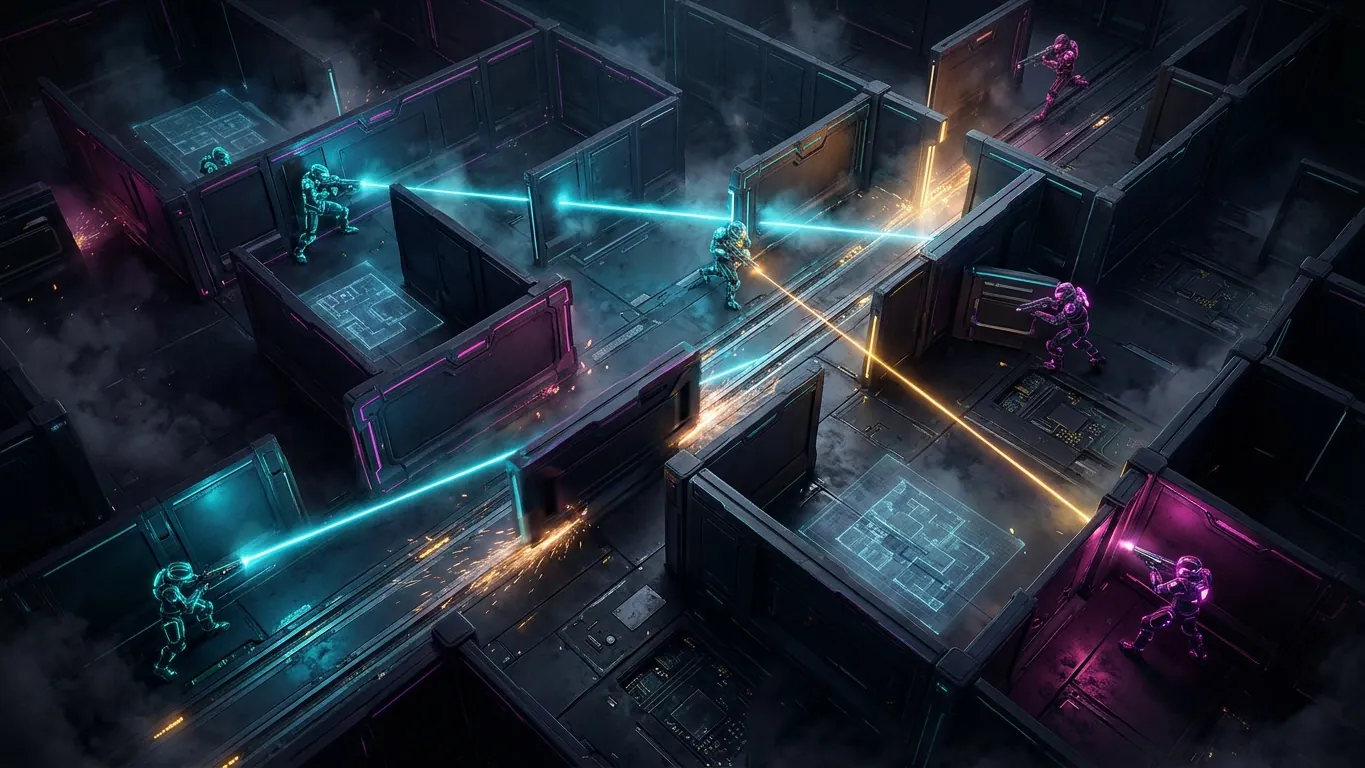
An arena that rearranges itself
In most arena games, the map is a fixed puzzle. You learn the corridors, memorise the corners and eventually move on instinct. The shifting maze works differently. Its walls are modular blocks that move into new positions while the match is running, so the layout you start with is rarely the layout you finish with.
This does not mean the arena is random chaos. The room keeps the same outer boundary, and the control points remain the anchors that every team cares about. What changes are the paths between them, the places where you can hide, and the lines along which a laser beam can travel. Learning the game is less about memorising one map and more about learning how to read any version of it quickly.
The warning before every rebuild
Just before the walls move, the game shows a warning. This short window is one of the most important moments in any match, because it gives you time to think instead of simply reacting.
New players often keep running and shooting during the warning, then find themselves trapped in a dead end when the walls settle. A calmer habit is to pause, glance at the holographic map and ask a simple question: where do I want to be when the new layout appears? Sometimes the answer is to stay put behind solid cover. Sometimes it is to move toward a control point that is about to become easier to reach. Either way, the warning rewards players who plan.
Reading the arena from above
The game is played from a top-down view. That perspective is a real advantage in a changing maze, because you can see the shape of nearby corridors and the direction of laser beams at a glance. The rooms themselves are dark, which makes the bright beams and glowing markers stand out clearly.
The holographic map adds a wider picture. While the main view shows your immediate surroundings, the map helps you understand where control points are, which areas your team holds and how the next rebuild might affect your route. Getting into the habit of checking the map regularly, not only during warnings, makes the whole arena feel far less confusing.
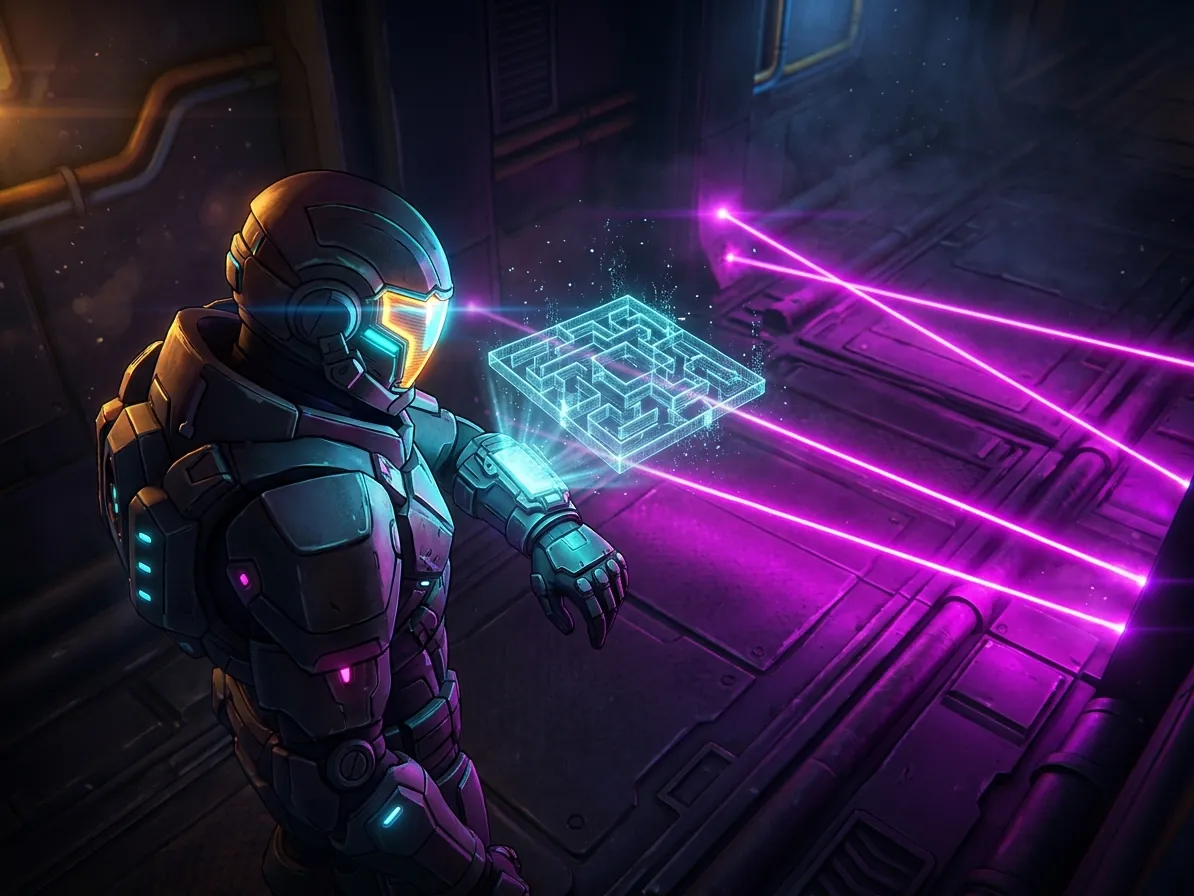
Why matches stay short
Matches in this game are short, and each one can use a different victory condition. Short matches suit the shifting maze well. A long match in a constantly changing arena could become tiring, while a brief one keeps every decision meaningful and every rebuild noticeable.
Short matches also make learning easier. You can try a new role, a different piece of gear or an unfamiliar route, see how it works and then adjust in the next match. Treat each one as a small experiment rather than a final test of skill, and your understanding of the arena will grow steadily.
Habits that help in the first matches
A few simple habits make the opening hours with the shifting maze much smoother. First, stay near solid cover when a warning appears, so a new opening does not leave you exposed. Second, learn where the reflective surfaces are, because beams can arrive from angles you are not facing. Third, pick a single role for a while instead of switching every match.
Finally, play some matches against computer-controlled rivals before worrying about complex tactics. These matches let you watch how the walls move and how control points change hands without much pressure. Once the basic rhythm of warning, rebuild and response feels familiar, the deeper guides on this blog will make much more sense.
Related articles
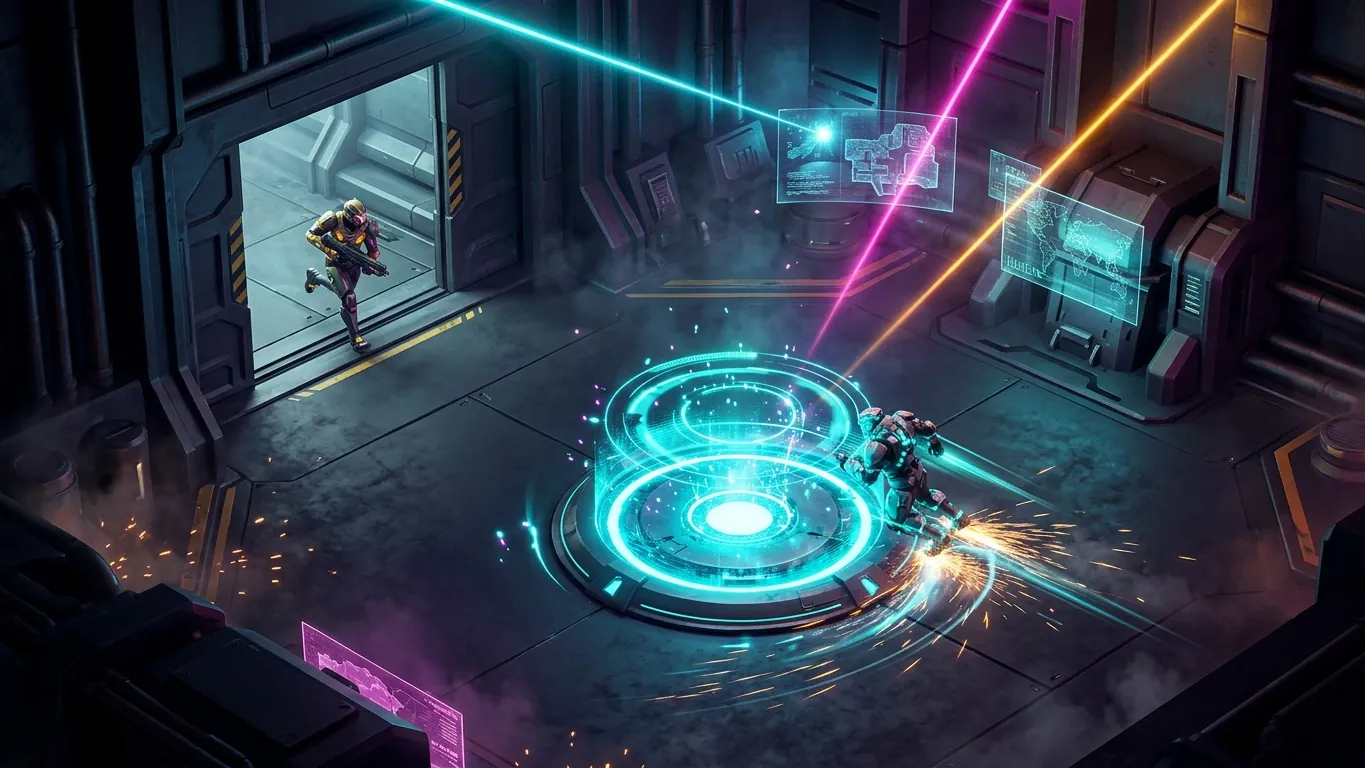 Capturing control points in a moving maze
A practical guide to approaching, capturing and holding control points when the arena walls rebuild during the match and routes keep changing.
Read more
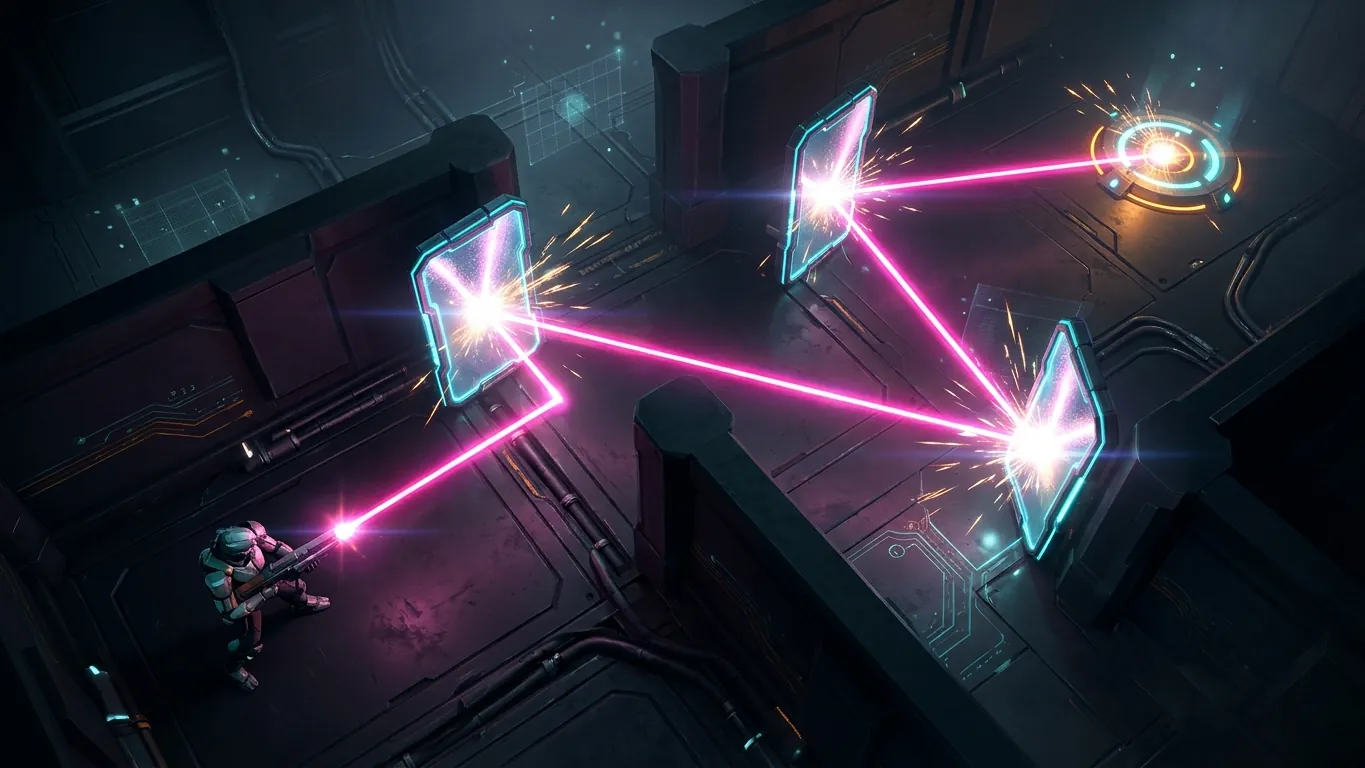 Bank shots and mirrors: reflective surfaces explained
An explainer on reflective surfaces in shifting maze laser tag: how angles work from above, how to use bank shots and how to stay aware of indirect beams.
Read more
 Scout, defender or rusher: choosing your playstyle
Compare scouting, defence and fast attacks in shifting maze laser tag, and learn how to choose a playstyle and when switching roles makes sense.
Read more