Scout, defender or rusher: choosing your playstyle
The game lets you lean toward scouting, defence or fast attacks. This guide compares the three styles and explains how each one responds to a changing arena.

Three ways to play the same arena
Every match offers the same shifting maze to every player, but the way you move through it can vary a great deal. The game lets you choose between three broad approaches: scouting, defence and fast attacks. None of them is the correct choice in every situation; each one suits a different temperament and a different moment in a match.
Thinking in terms of roles helps with decision-making. When a rebuild warning appears, a scout, a defender and a rusher will each ask a different question. Knowing which question is yours makes those short windows far less stressful.
Scouting: information first
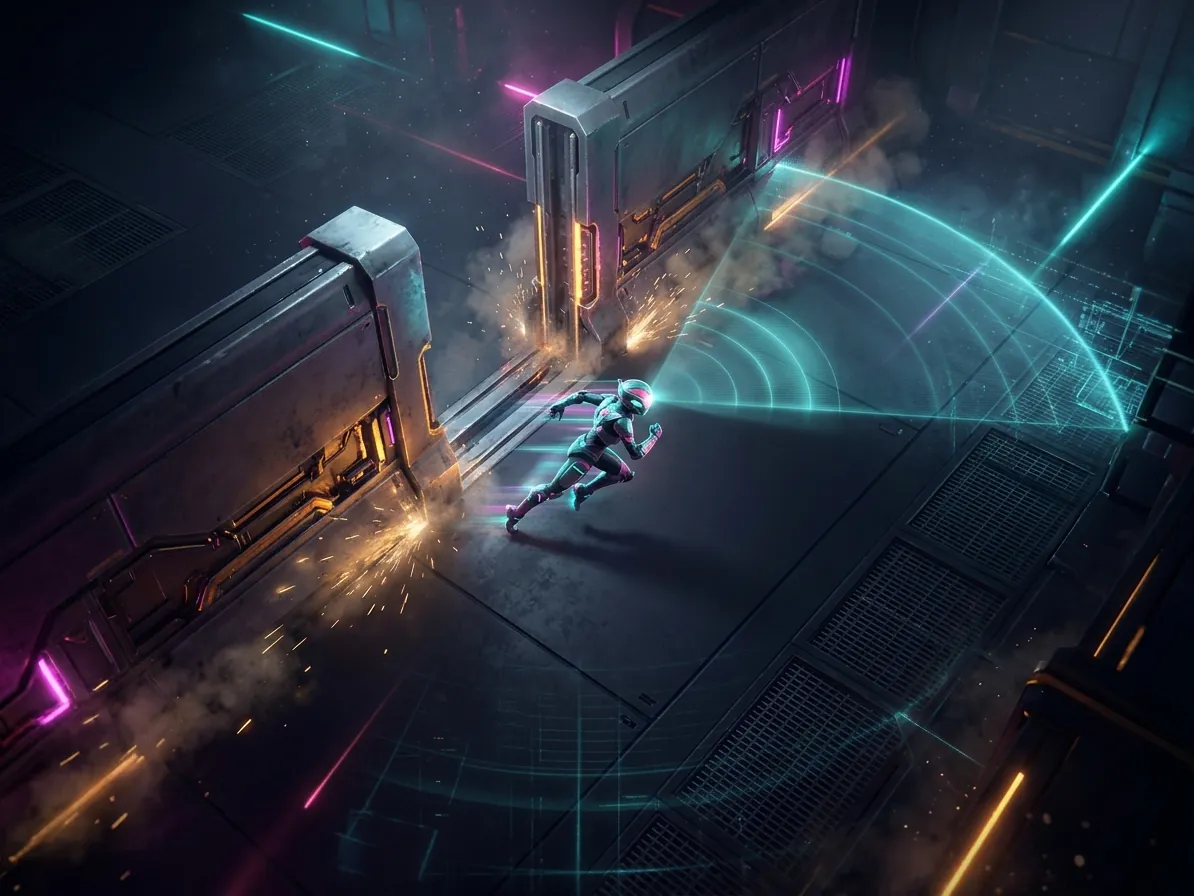
A scout's main job is to learn things and share them through movement and awareness. Scouts move ahead of the team, check corridors that have just opened after a rebuild and locate rivals before a push toward a control point.
The scout's question during a warning is: what will I need to see once the walls settle? Good scouting means keeping an eye on the holographic map, staying mobile and avoiding long fights. A scout who gets drawn into a drawn-out exchange of fire stops gathering information. This style suits players who enjoy exploring, noticing patterns and staying one step ahead of the arena's changes rather than standing their ground.
Defence: making a point hard to take
Defenders focus on holding what the team has captured. They stay close to control points, cover likely entrances and watch reflective surfaces that could carry beams toward them.
The defender's question during a warning is: where will attackers come from once the walls move? Strong defence is about positioning rather than reflexes alone. A defender who adjusts their spot slightly after each rebuild, so that they can see the newest entrances, is much harder to dislodge than one who stays in the same corner all match. This style suits patient players who enjoy reading the arena and reacting thoughtfully to pressure.
Fast attacks: pressure and timing
Rushers bring speed and pressure. They push toward rival-held points, take advantage of new openings created by a rebuild and try to catch defenders before they reposition.
The rusher's question during a warning is: which opening will reach the target fastest? Timing is everything. Moving the moment the walls settle, while rivals are still reorienting, can be very effective. Moving too early, while the walls are still shifting, can leave you stranded. This style suits players who enjoy quick decisions and are comfortable taking calculated chances, and it pairs naturally with a scout who can point out where the path is clear.
Switching between styles mid-match
While it helps to learn one role at a time, experienced players often blend styles depending on what the match needs. If your team holds most points, leaning toward defence can be sensible. If you are behind and the match is nearly over, a burst of fast attacks may be the only way to catch up.
The victory condition also influences the choice. Matches focused on holding points reward patient defence, while matches focused on capturing reward speed and scouting. Short match lengths mean these shifts happen quickly, so make a habit of asking at each rebuild warning whether your current role still fits the situation. That simple check is often more valuable than any single tactic.
Related articles
 Facing computer-controlled rivals
Practical tips for playing against computer-controlled rivals in shifting maze laser tag: patterns to watch, using rebuilds and turning practice into…
Read more
 A field guide to gear types
An overview of equipment types in shifting maze laser tag, grouped by purpose: movement, protection and information, and how to match gear to your role.
Read more
 Short matches, different goals
Learn how different victory conditions change your priorities in short shifting maze laser tag matches, from holding control points to tagging rivals.
Read more