Bank shots and mirrors: reflective surfaces explained
Reflective surfaces let a laser beam travel around corners and arrive from unexpected angles. This explainer covers how to read them, use them and defend against them.
Why reflective surfaces matter
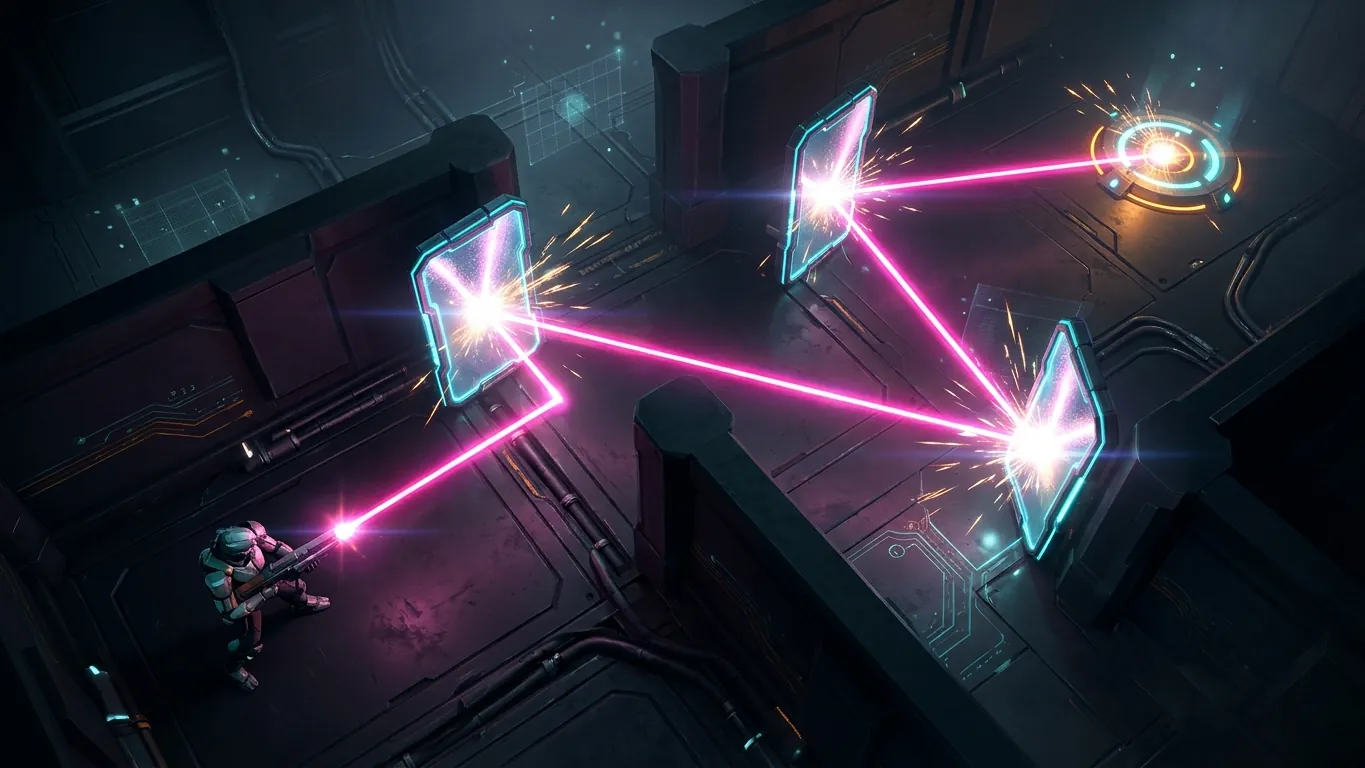
In ordinary laser tag, you can only tag what you can see directly. Reflective surfaces change that. A beam that hits a mirrored panel continues in a new direction, which means you can reach a rival hiding around a corner, and a rival can reach you in the same way.
In a maze that rebuilds itself, this adds another layer of thinking. When walls move, the angles between reflective surfaces change too. A safe corner before the rebuild might become exposed to a reflected beam afterwards. Understanding reflections is not only an attacking skill; it is a basic part of staying aware of where danger can come from.
Reading angles from a top-down view
The top-down perspective makes reflections easier to understand than they would be from eye level. You can see each reflective surface as a line on the floor plan and imagine the beam bouncing off it like a ball off a cushion: the angle it arrives at matches the angle it leaves at.
Start by looking at a single reflective panel and asking where a beam would need to start to reach a particular spot. Picture the line coming in, then going out. With practice, you will begin to spot useful angles without stopping to think. The dark rooms and bright beams help here too, because every shot leaves a clear visible trail that shows exactly how the reflection behaved.
Offensive uses of reflections
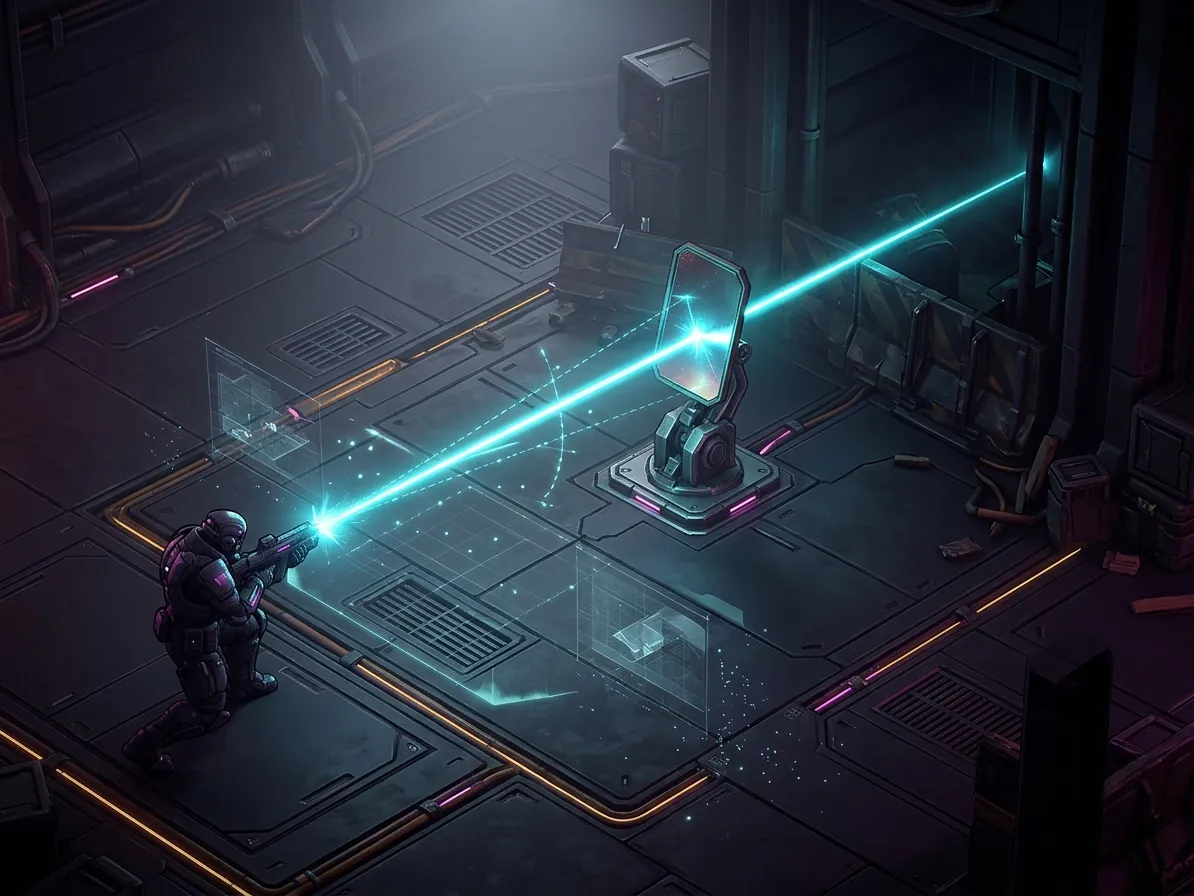
The most common use of a reflective surface is the bank shot: tagging a rival who is protected from direct fire. This is especially useful around control points, where defenders often stand behind cover facing the obvious entrance. A beam arriving from a reflection can catch them before they realise where it came from.
Reflections also let you take shots while staying behind your own cover. Instead of stepping into an open corridor, you can aim at a panel that redirects the beam into it. Keep your first attempts simple. A single bounce is far easier to judge than a chain of several, and a reliable one-bounce shot is more valuable than an ambitious multi-bounce shot that rarely lands.
Defensive awareness
Every reflective surface near you is a possible route for incoming beams. When you settle into a position, especially on a control point, take a quick look at nearby panels and ask which directions they could send a beam toward you. If you are standing in the path of a likely reflection, shifting a short distance can make a real difference.
Rebuilds deserve special attention. When the warning appears, check whether the moving walls will bring new reflective surfaces into your area or change the angles of existing ones. Defenders who reposition slightly after each rebuild tend to be much harder to tag than those who stay frozen in place.
Practice ideas for better angles
These exercises help build an instinct for reflections over a few sessions.
- 01
Single-panel drills
Choose one reflective surface and practise hitting different spots with a single bounce.
- 02
Watch the beam trails
After each shot, look at the visible trail and compare it with where you expected it to go.
- 03
Practise against computer rivals
Use calmer matches to try bank shots without the pressure of a close contest.
- 04
Check panels after rebuilds
Make a habit of noting which reflective surfaces moved each time the walls settle.
Related articles
 Scout, defender or rusher: choosing your playstyle
Compare scouting, defence and fast attacks in shifting maze laser tag, and learn how to choose a playstyle and when switching roles makes sense.
Read more
 Facing computer-controlled rivals
Practical tips for playing against computer-controlled rivals in shifting maze laser tag: patterns to watch, using rebuilds and turning practice into…
Read more
 A field guide to gear types
An overview of equipment types in shifting maze laser tag, grouped by purpose: movement, protection and information, and how to match gear to your role.
Read more