Using the rebuild warning to plan your next move
Before the arena's walls move, the game shows a warning. These tips explain how to use that short window to plan instead of simply reacting.
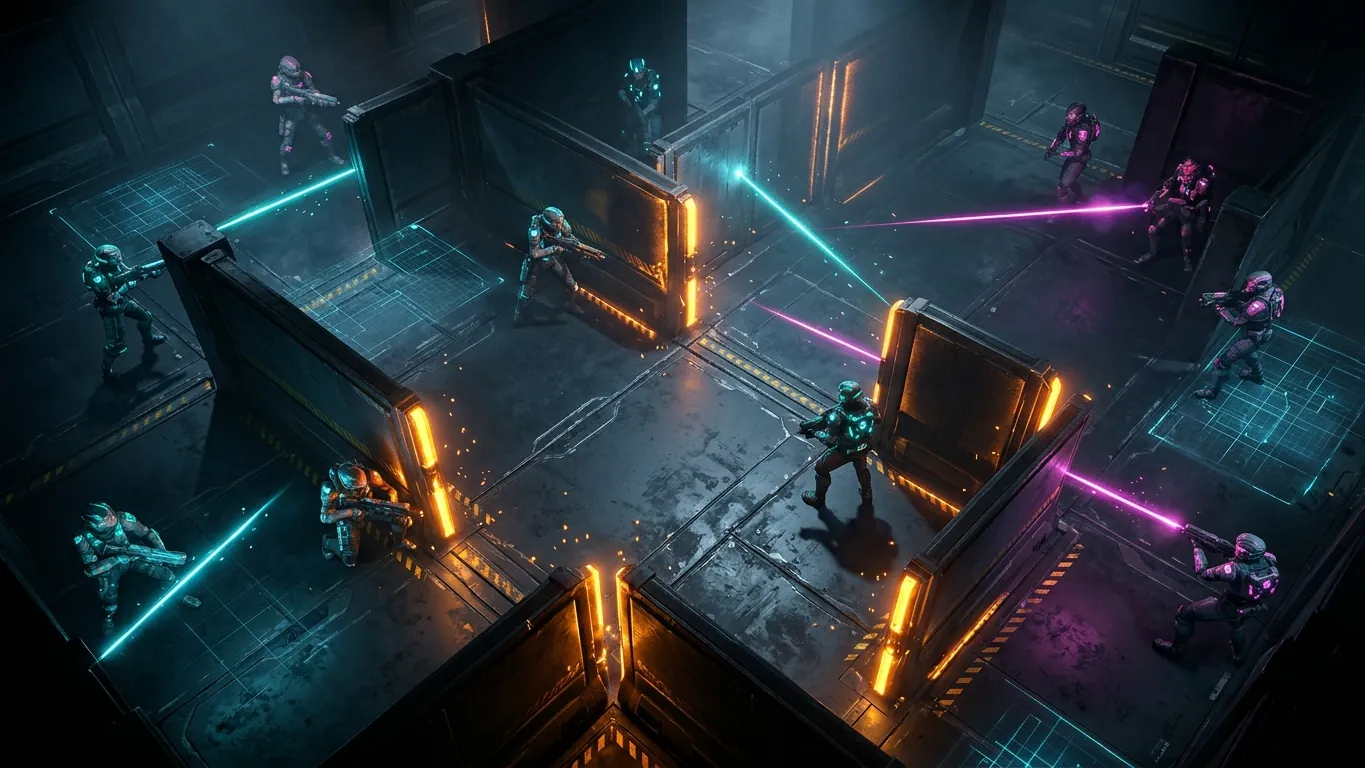
A short window that shapes the match
The warning before each rebuild is one of the most distinctive features of this game. It exists so that players can think about their next move rather than being surprised by a sudden change. Used well, it turns the shifting maze from a source of confusion into a source of opportunity.
Many players, especially early on, ignore the warning and keep doing whatever they were doing. Then the walls settle and they find themselves cut off from their team, stuck in a dead end or suddenly exposed. Learning to treat the warning as a planning moment is one of the most useful skills you can develop.
A five-step routine during the warning
This routine is short enough to run through every time a warning appears.
- 01
Pause your current action
Unless you are in the middle of a decisive exchange, stop and give the warning your attention.
- 02
Glance at the holographic map
Look at which areas are about to change and where control points sit relative to you.
- 03
Pick a destination
Decide where you want to be when the walls settle, based on your role and the match goal.
- 04
Check your cover
Make sure you will not be left standing in a newly opened space with no protection.
- 05
Move with purpose
Once the new layout appears, act on your plan without hesitation.
Reading the holographic map under pressure
The holographic map is your main tool during a warning. It gives a wider view of the arena than your immediate surroundings and helps you understand how the rebuild may affect your route.
Under pressure, it is tempting to stare at the map for too long. A better approach is to look for just two or three pieces of information: where you are, where your target is and which nearby walls are likely to change. Over time, you will learn to take this in with a quick glance. Practising the habit in calmer matches against computer rivals makes it far easier to do when a close match is on the line.
Common mistakes during a rebuild
A few mistakes appear again and again. The first is moving while walls are still shifting, which can leave you stranded on the wrong side of a new barrier. Wait until the layout settles before committing to a route.
The second is forgetting about reflective surfaces. When walls move, the angles between mirrored panels change, and a corner that was safe may suddenly be reachable by reflected beams. The third is ignoring teammates. If everyone chooses a destination independently, the team can end up scattered. Even a rough sense of where your teammates are heading helps keep the group together.
Building the habit
Like most skills, using the warning well comes from repetition. For a few sessions, make it your single focus. Every time the warning appears, run through the routine, even if the situation seems simple. Before long, the steps will happen naturally and you will notice that rebuilds feel less chaotic.
It also helps to review what happened after a match. Did your chosen destination work out? Were there moments when you were caught off guard? Because matches are short, each one offers several rebuilds to learn from. With steady practice, the warning becomes one of the moments you look forward to, since it is when careful players can gain an edge.
Related articles
 Why dark rooms and bright beams work from above
An opinion piece on the top-down view, dark rooms, bright laser beams, holographic map and English and French interface of shifting maze laser tag.
Read more
 How the shifting maze works
A plain-language introduction to laser tag in an arena whose walls rebuild mid-match: the rebuild warning, the top-down view and why matches stay short.
Read more
 Capturing control points in a moving maze
A practical guide to approaching, capturing and holding control points when the arena walls rebuild during the match and routes keep changing.
Read more