Why dark rooms and bright beams work from above
The game's look is more than decoration. In this opinion piece, we explain why the top-down view, dark rooms, bright lasers and holographic map suit a maze that keeps changing.
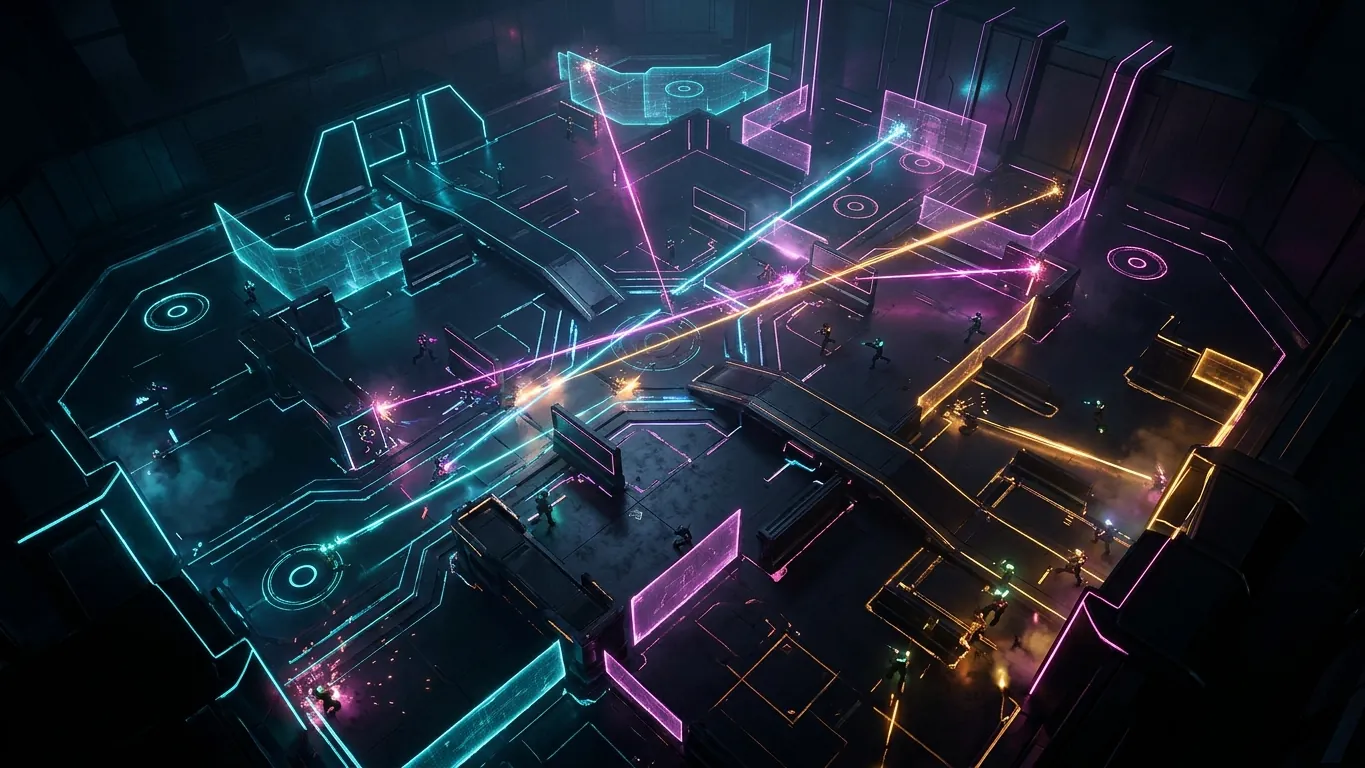
A style that serves the rules
It is easy to think of visual style as a matter of taste, separate from how a game plays. In this laser tag game, the two are closely connected. The top-down view, the dark rooms, the bright beams and the holographic map all exist to make a complicated, changing space readable.
In our view, this is one of the game's quiet strengths. A maze that rebuilds itself during a match could easily become confusing. Instead, the visual choices give players a clear picture of what is happening at any moment, so that the challenge comes from decision-making rather than from struggling to see.
Darkness as information
Dark environments are often used in games to create tension, and that is part of their role here. But darkness also does something practical. When the floor and walls are muted, every bright element stands out: laser beams, control point markers, reflective panels and the warning that comes before a rebuild.
This contrast makes beam paths especially easy to follow. When a shot bounces off a mirrored surface, you can see the full route it took. That visual feedback is invaluable for learning reflections, because every attempt shows you exactly how the angle behaved. In a brighter, busier arena, those details would be much harder to notice.
The top-down view and the holographic map
Viewing the arena from above gives players something they would lack at eye level: the shape of the maze. You can see corridors, corners and openings as a floor plan, which is exactly what you need when walls keep moving.
The holographic map extends that idea. It acts like a second layer of awareness, showing the wider arena while the main view focuses on your surroundings. We think the combination works well because each view answers a different question. The main view tells you what is near you now. The map tells you where you might want to be after the next rebuild. Together, they encourage a calm, planning-oriented style of play.
Playing in English or French
The game's interface is available in both English and French. For players in Canada, where both languages are widely used, this is a welcome and practical choice. Being able to read instructions, victory conditions and warnings in your preferred language makes a real difference, particularly in a game where quick understanding matters.
A clear interface supports the visual style as well. When the arena itself is dark and busy with beams, the information you read needs to be easy to process. Choosing the language you are most comfortable with removes one more small obstacle between you and the decisions that matter.
Why the style holds up
Some visual styles feel exciting at first and then become tiring. In our opinion, this one holds up because it is grounded in purpose. Every glowing line and every pool of shadow helps you understand the arena, track beams or anticipate a rebuild.
The futuristic Toronto setting adds character without getting in the way. It gives the arena a sense of place while keeping attention on the maze itself. For players who enjoy tactical thinking, this balance between atmosphere and clarity is a large part of what makes the shifting maze rewarding to return to. Of course, taste varies, and we would be glad to hear how the style feels to you.
Related articles
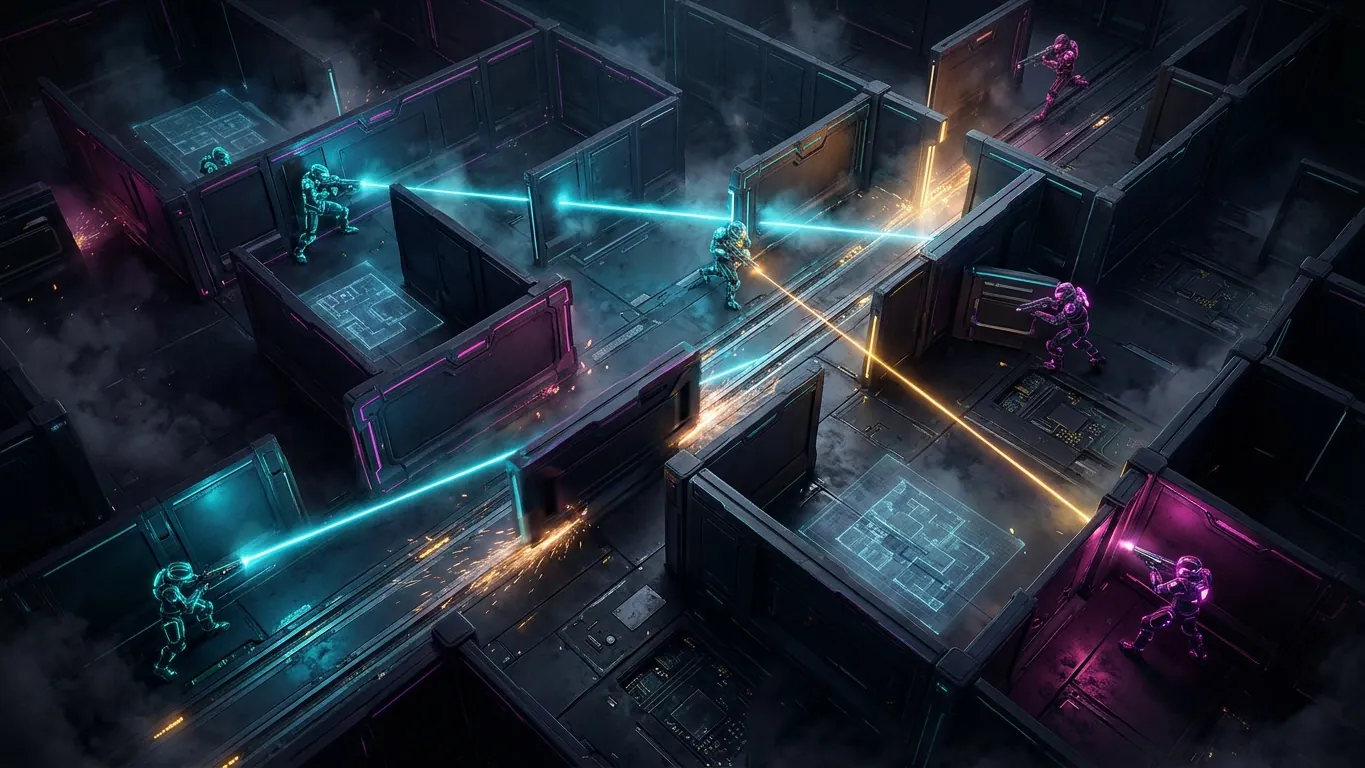 How the shifting maze works
A plain-language introduction to laser tag in an arena whose walls rebuild mid-match: the rebuild warning, the top-down view and why matches stay short.
Read more
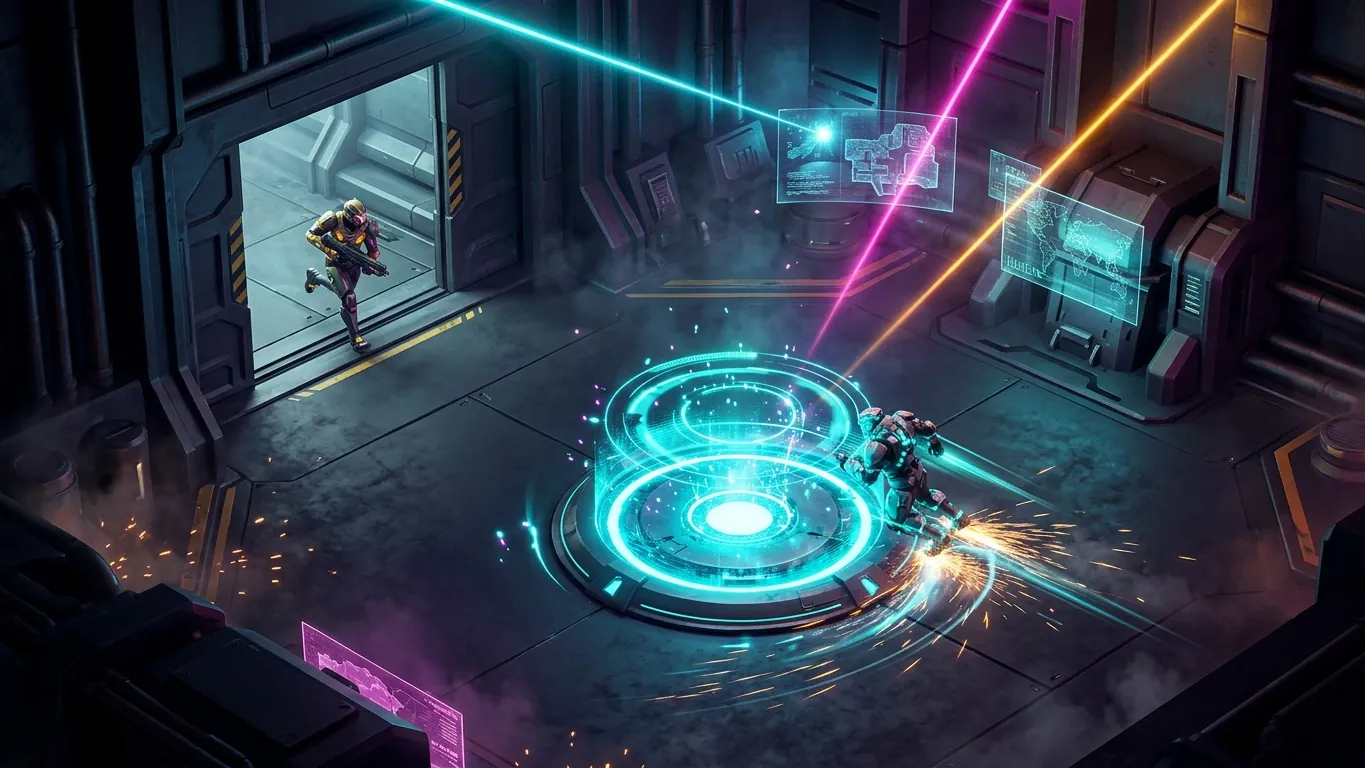 Capturing control points in a moving maze
A practical guide to approaching, capturing and holding control points when the arena walls rebuild during the match and routes keep changing.
Read more
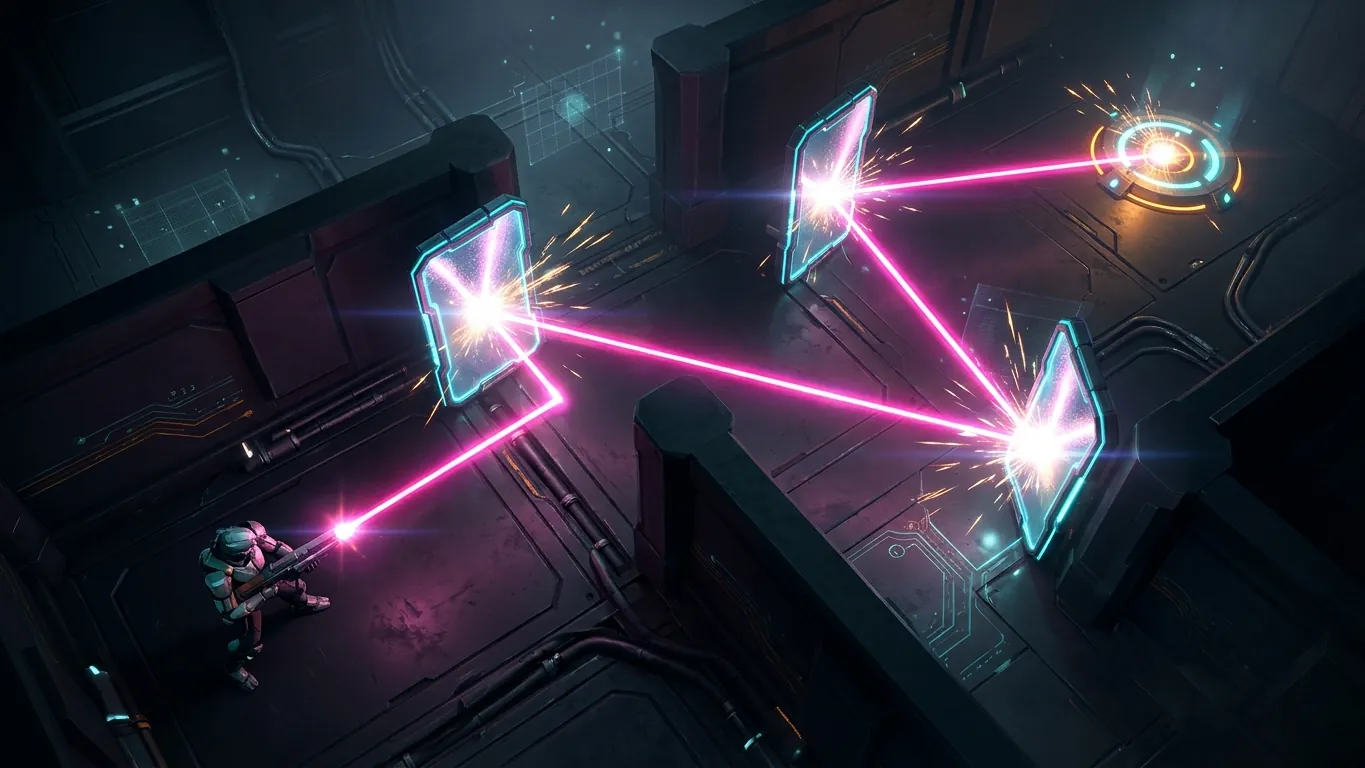 Bank shots and mirrors: reflective surfaces explained
An explainer on reflective surfaces in shifting maze laser tag: how angles work from above, how to use bank shots and how to stay aware of indirect beams.
Read more